Enter password to view case study

NURSE.cOM
Helping nurse.com become where healthcare orgs hire, track, and plan.
Duration
12 weeks - 6 weeks design, 6 week support during development phase
Team
(me) Product Designer, (1) Project Manager, (2) Engineers
SUMMARY
One question enabled tracking for orgs
Recruiters posted jobs on the platform, then disappeared. Without a end-point, we had zero hiring outcomes. I fixed that with a 2 step flow that asked one thing, 'who was hired' and unlocked time-to-hire, source of hire, cost-per-hire.
DESIGN PROCESS
Rapid iterations, self-driven problem-solving, and frequent cross-functional collaboration.
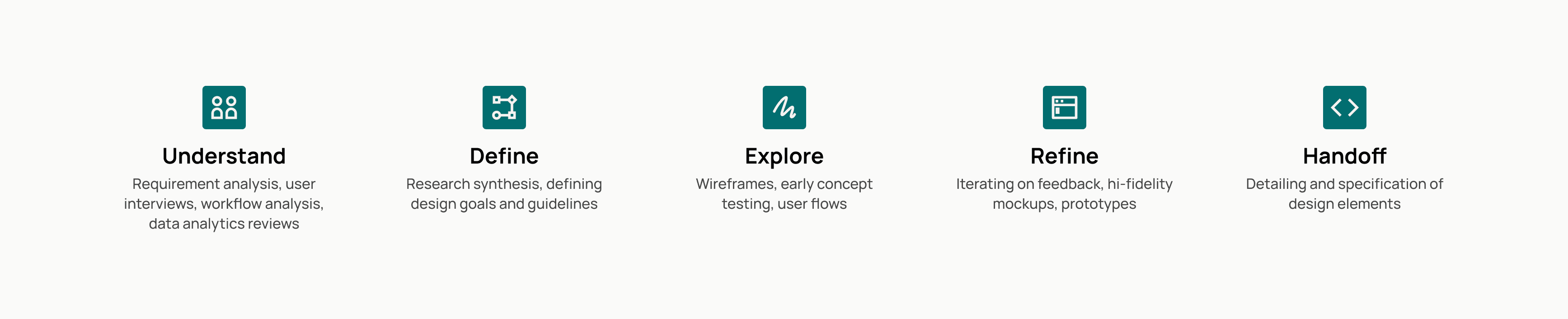
I adapt my design process based on the time, resources, and expected outcomes of my role. I adopted a fast-paced design process comprising of requirement analysis, user journey mapping, frequent collaborations and check-ins, rapid iterations of messy sketches and low-fidelity wireframes, and organized execution of high-fidelity prototypes and engineering hand-offs
BACKGROUND + PROBLEM SPACE
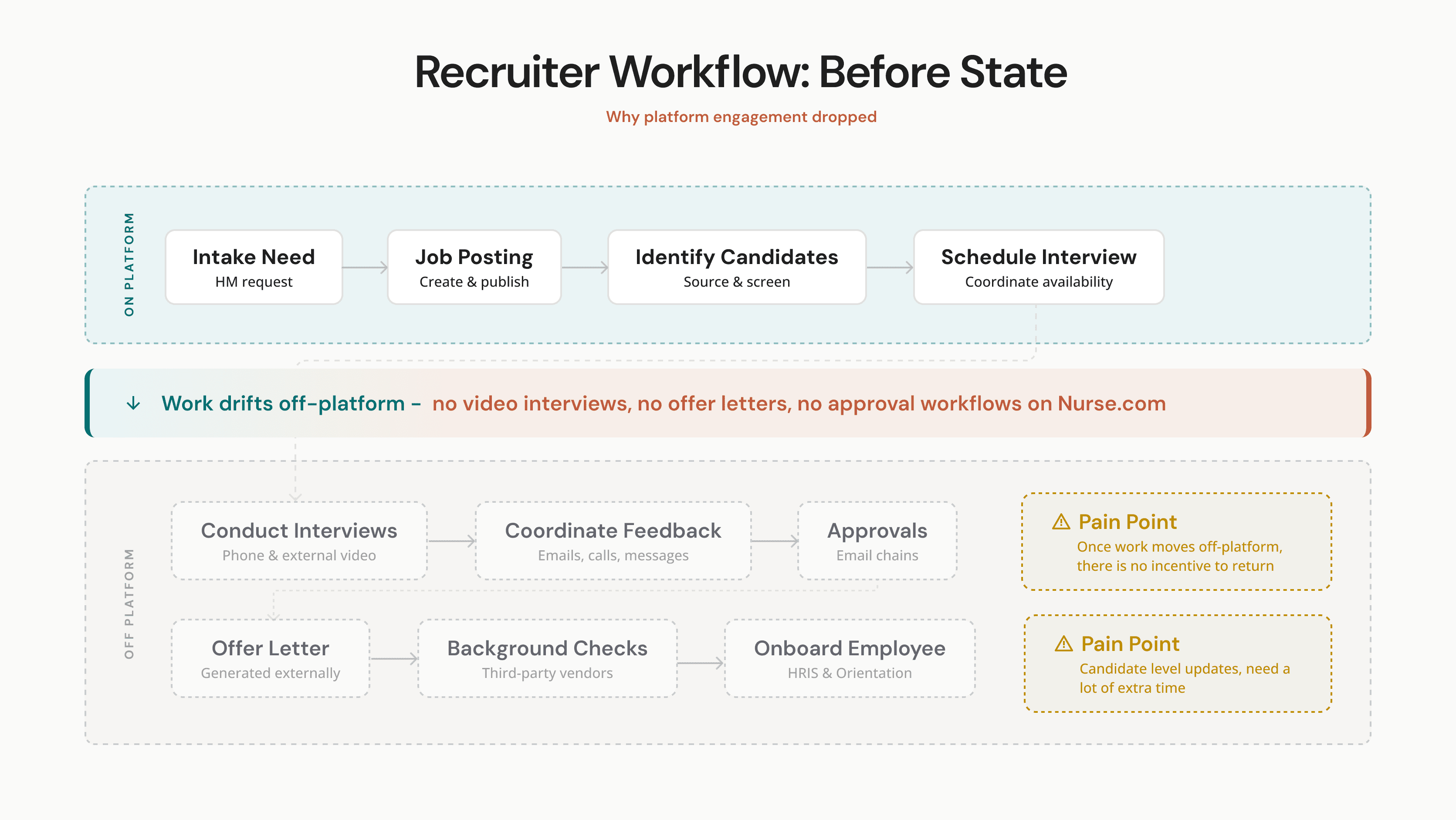
Recruiters were actively tracking candidates — just not on-platform.
Returning to update statuses meant re-entering what they already knew from calls and emails. When they stopped, Nurse.com lost all visibility into pipeline health, candidate progress, and hiring outcomes.

Impact
Data gaps
Without their continued engagement, we lost reliable insight into hiring outcomes.
DESIGN GOALS
The goal was to create a low-effort, flexible close flow that captured meaningful data without increasing friction for recruiters.
SOLUTION
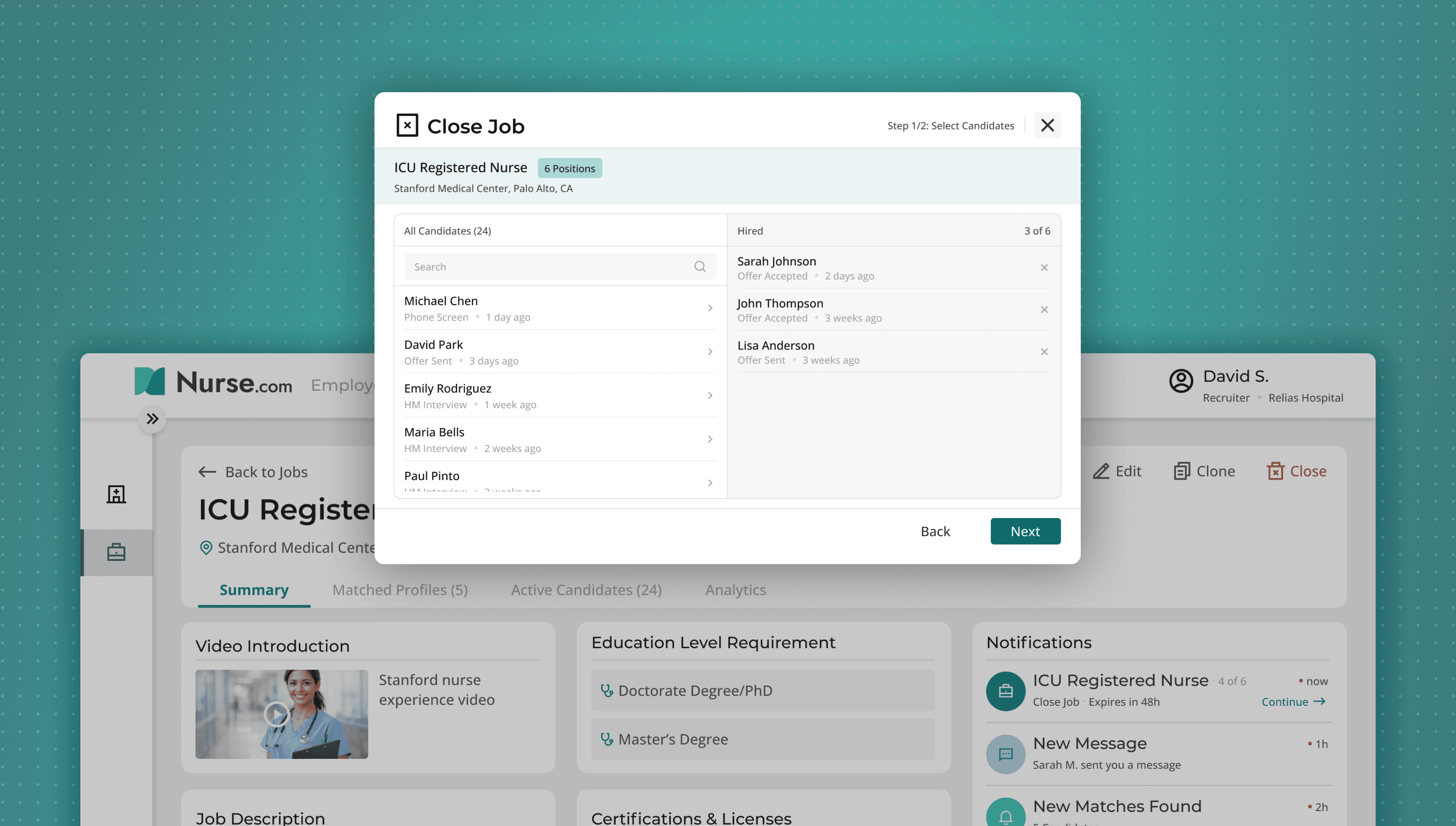
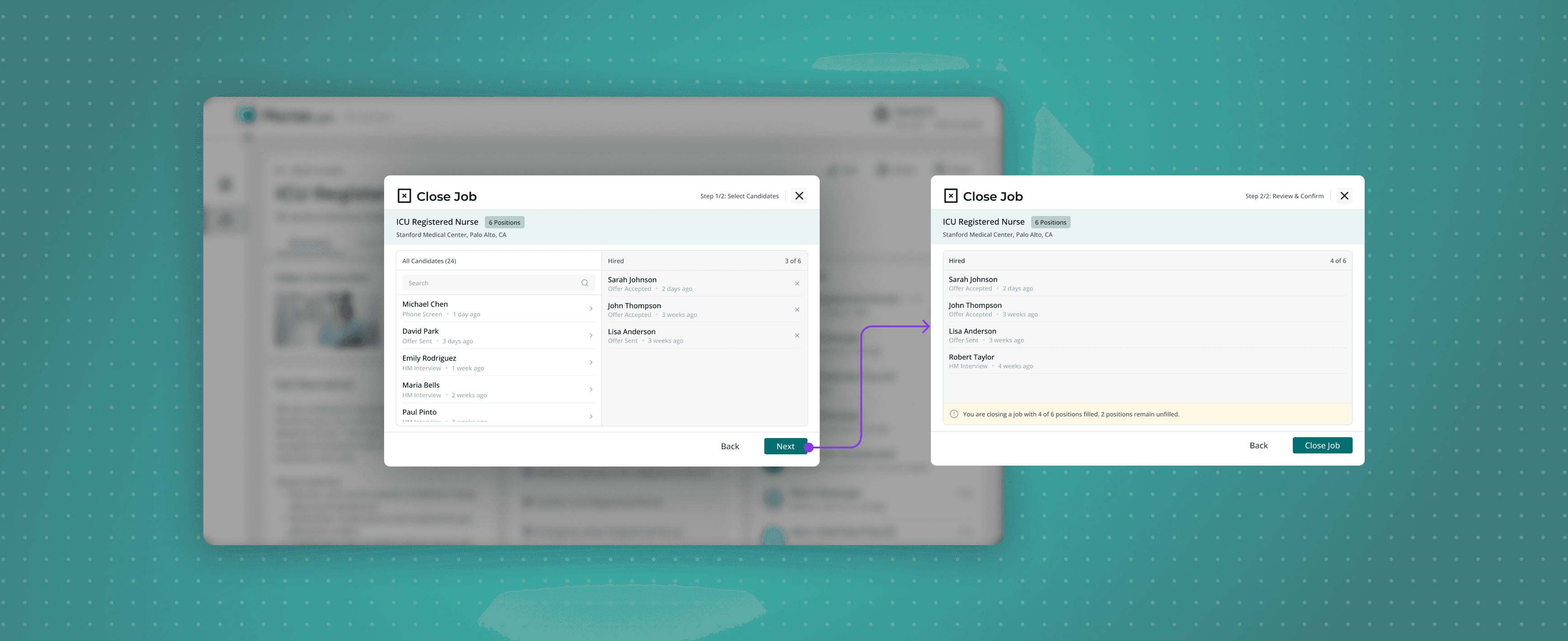
A structured Close Job flow that documents hiring outcomes at the job level.
DESIGN DECISION 1
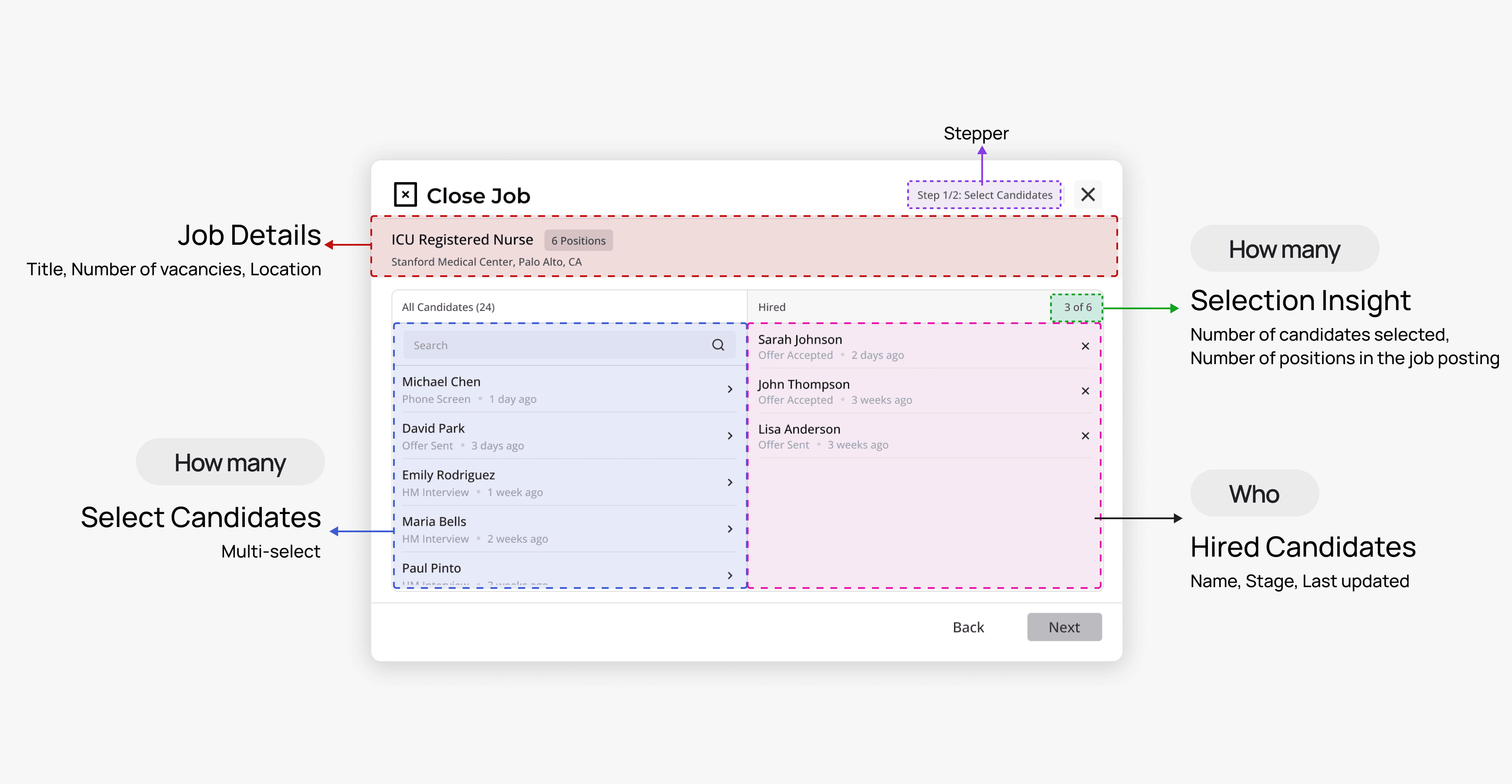
Collecting only what matters
Early testing showed that asking for too much data during closure led to drop-offs. I stripped it back to just the essentials — who and how many.
DESIGN DECISION 2
Cutting down manual work
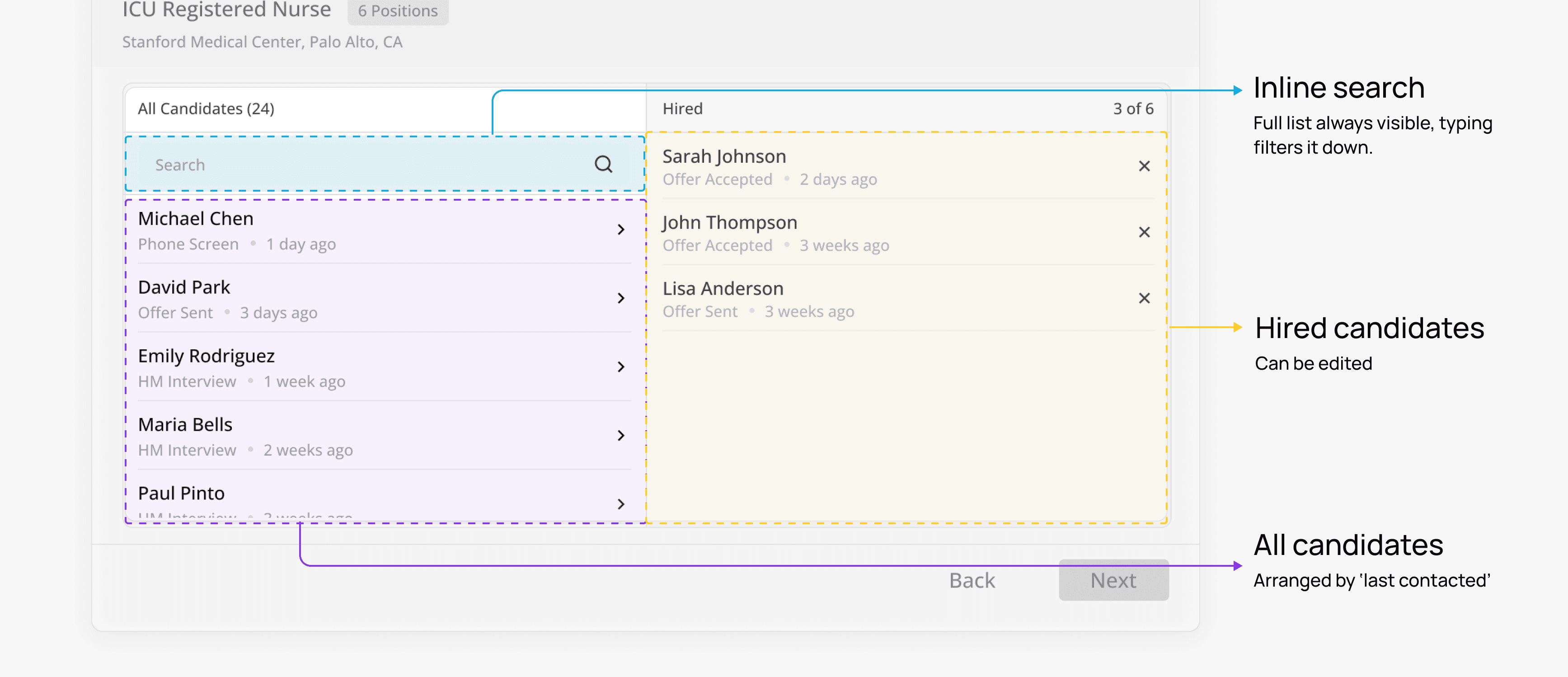
Pulled in existing pipeline data — candidates and their latest status — so nothing needed re-entering.
Used a search-and-add pattern for selecting hires, which matched how users already think and work.
DESIGN DECISION 3
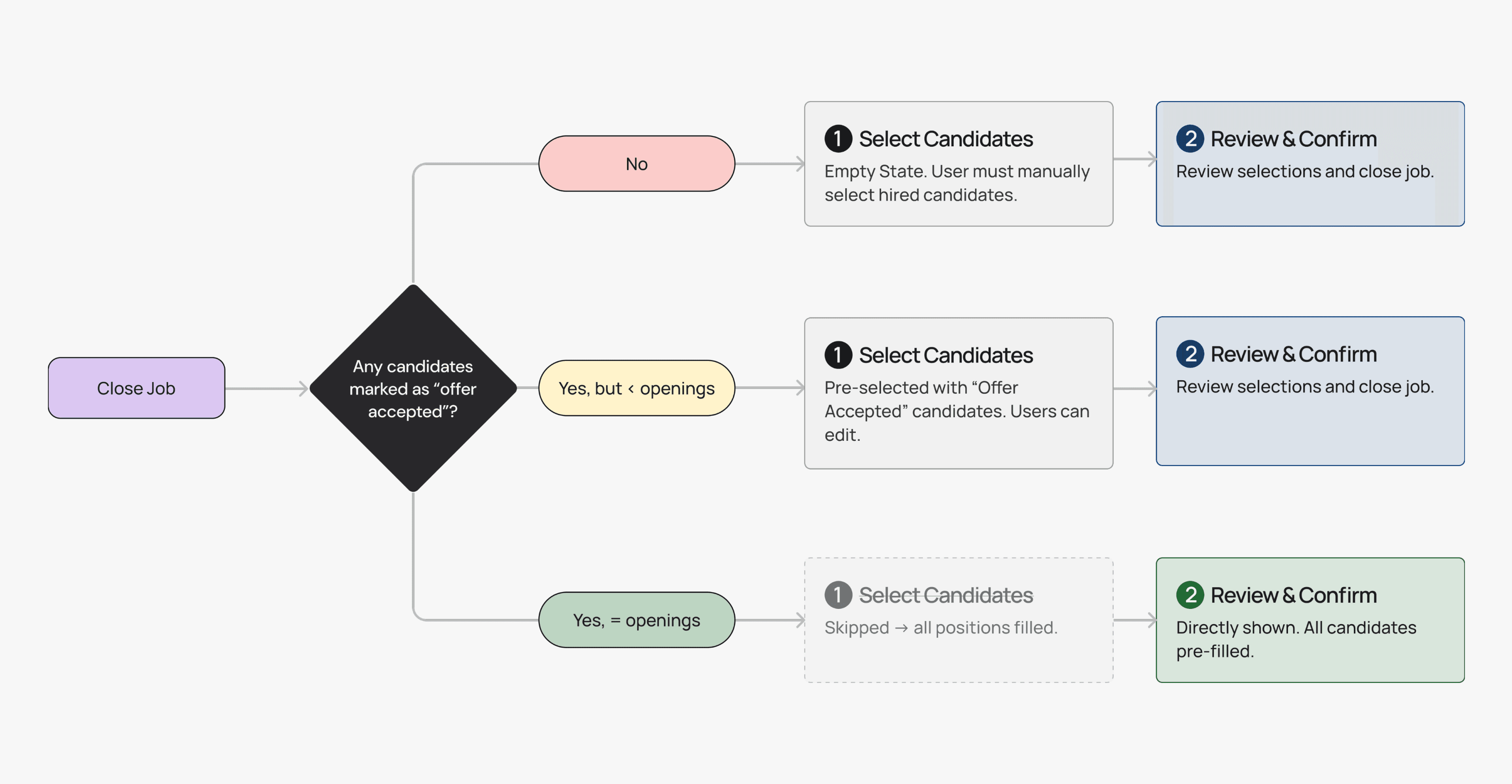
Flexible closure, not forced closure
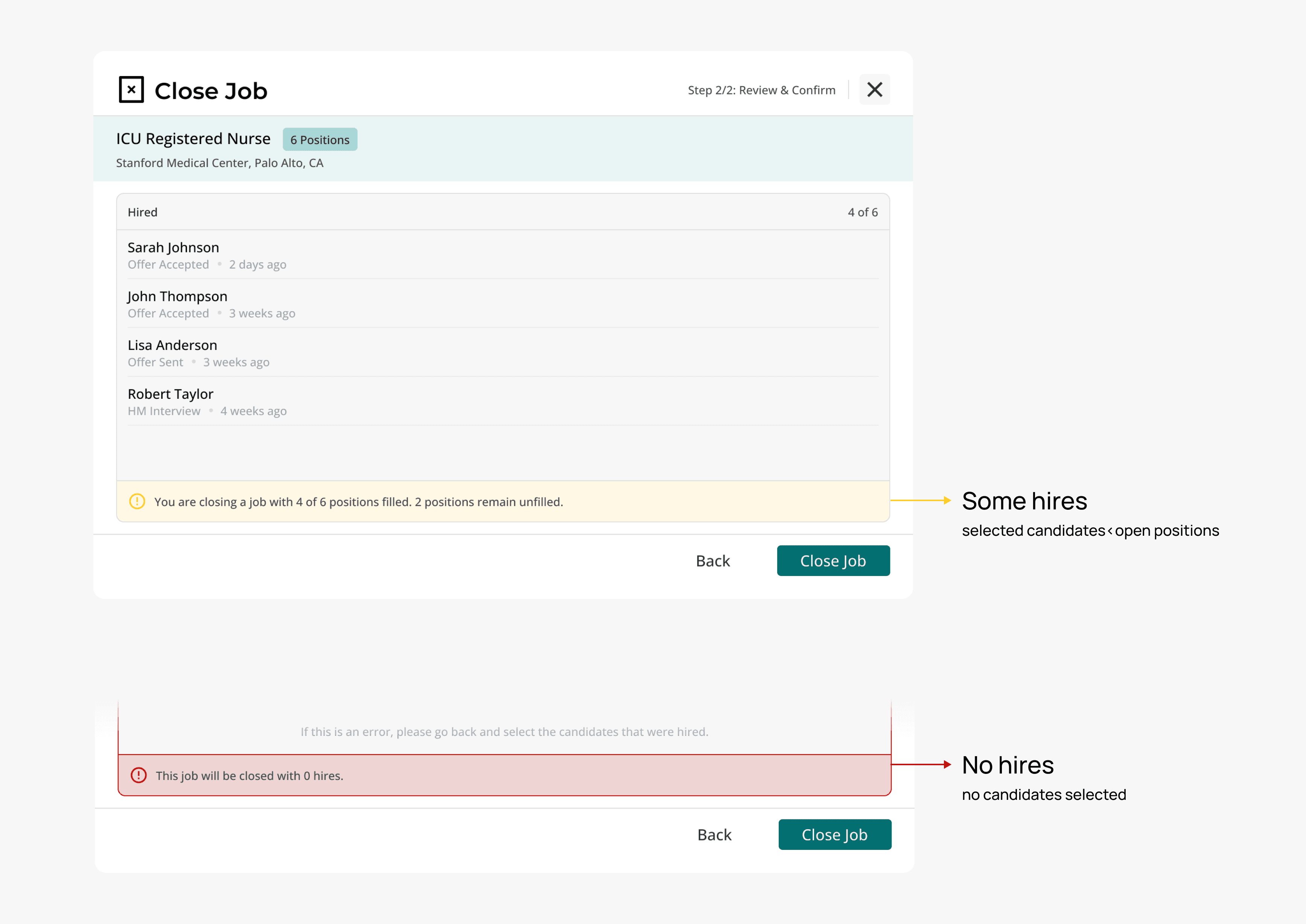
Jobs close in messy ways — all roles filled, some, or none. Instead of forcing one path, we introduced branching flows for each scenario with inline warnings that surface what's about to change before users commit.
Led the way for performance analytics dashboard
Close job feature turned job closure into a reliable data capture point — making fill rates, time-to-hire, and source tracking possible for the first time.
~33%
Decrease in redundant jobs
on nurse.com
24%
Increase in adoption rate
in 3 months, compared to beta testing
3%
Increase in engagement
with the candidate tracker